

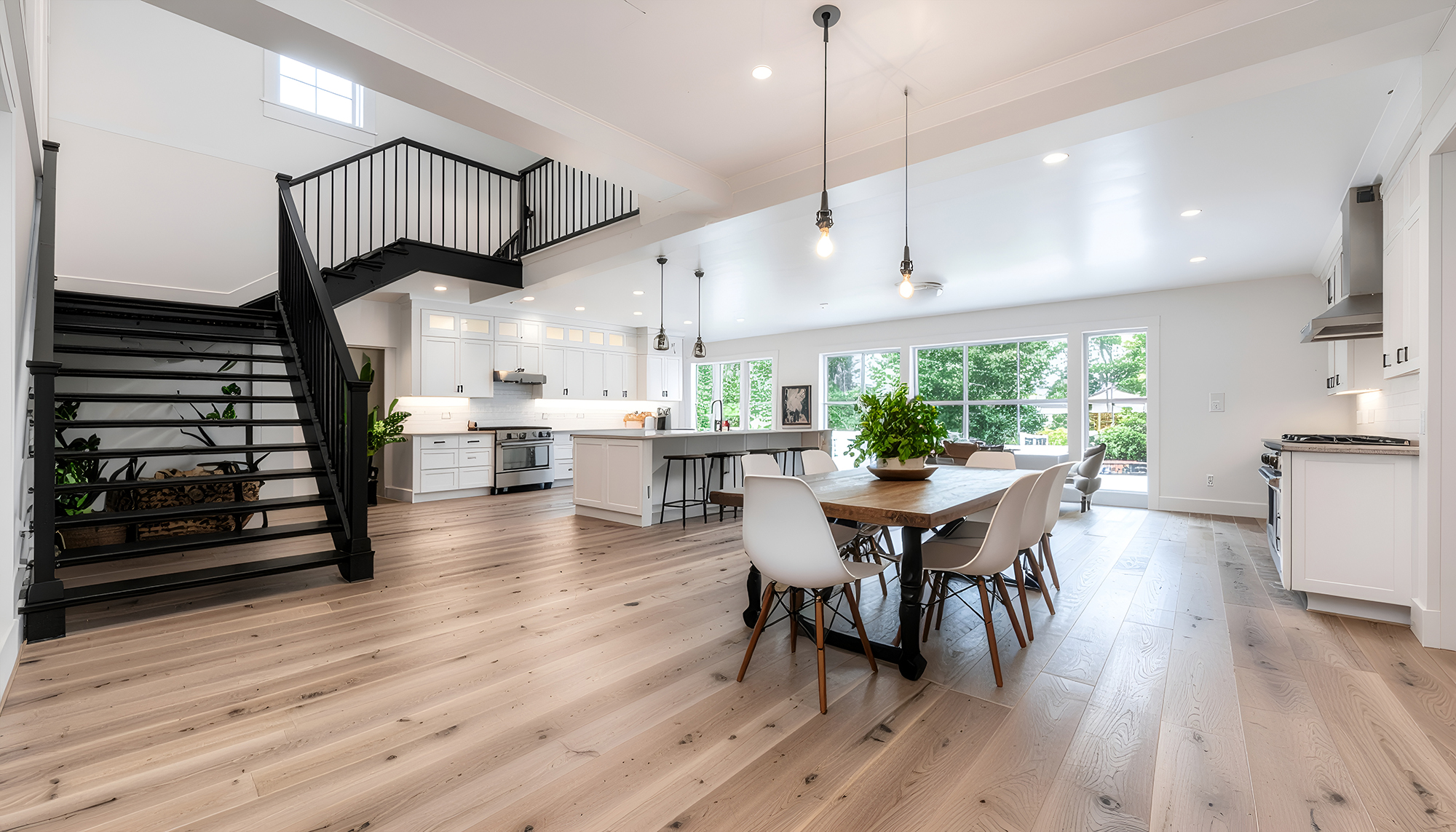
Hardwood flooring has a way of making a room feel established, warm, and thoughtfully designed. Its natural grain, subtle color variation, and genuine wood character can complement everything from traditional interiors to contemporary open-concept homes. Yet choosing hardwood is not simply a matter of selecting a color that looks attractive in a showroom. Plank width, wood species, finish, lighting, and the proportions of the room all influence the final result.
Wide-plank hardwood has become an especially appealing choice for homeowners looking to create a more relaxed and natural interior. The broader boards allow the grain and character of the wood to take center stage, creating a floor that feels less repetitive and more connected to the materials found throughout the home. For homeowners in Folsom and Roseville planning a renovation, understanding these details can make the selection process more rewarding.
Why Wide-Plank Hardwood Creates a Different Impression
Traditional narrow-strip flooring creates a repeating pattern of smaller boards across the room. Wide-plank hardwood changes that rhythm by introducing longer and broader sections of natural grain. The result can feel more open, understated, and architectural, particularly in living rooms and other spaces with generous floor areas.
Wider boards also allow the natural characteristics of the selected wood to become more visible. Knots, grain movement, mineral streaks, and subtle color differences can contribute to a more individual appearance. Rather than presenting a perfectly uniform surface, the floor becomes a prominent natural feature within the interior.
This style works particularly well with simple furniture, clean architectural lines, and materials such as stone, metal, linen, and natural wood. It can also provide an interesting contrast in homes with traditional cabinetry or decorative architectural details.
However, wide planks are not automatically the right choice for every room. The dimensions of the space, the subfloor, the product construction, and the manufacturer's installation requirements should all be considered. A flooring professional can help determine whether the selected product is suitable for the home and the conditions in which it will be installed.
Choosing Between Natural Oak, Walnut, and Other Wood Tones
Color has a powerful effect on the atmosphere of a room. In recent design collections, warmer wood tones have been gaining attention as homeowners move away from interiors dominated by cool gray finishes. Natural oak, warm brown, honey shades, and richer walnut-inspired colors can create a more inviting appearance without making a space feel overly formal.
Natural oak is a versatile option because it can work with a broad range of interior styles. Lighter oak tones can help maintain an airy appearance, while medium oak shades introduce more warmth and definition. Depending on the grain and finish, oak can feel contemporary, rustic, or traditional.
Walnut offers a deeper and more pronounced character. Its richer brown tones can create a sense of depth and sophistication, particularly when paired with lighter walls, neutral upholstery, or understated cabinetry. It may be especially effective in a room where the floor is intended to become one of the main design features.
When comparing wood tones, pay attention to undertones rather than looking at the overall darkness alone. Some floors have golden or reddish undertones, while others lean toward neutral brown. A floor that appears attractive on its own may clash with existing cabinets, trim, or furniture if the undertones are not considered.
How Natural Light Changes the Appearance of Hardwood
Natural light can make the same hardwood floor look different throughout the day. Morning sunlight, afternoon brightness, and artificial lighting in the evening can each influence how a finish is perceived. This is particularly important in California homes, where rooms with large windows and open layouts may receive strong sunlight for extended periods.
A light-colored floor can help maintain a bright, relaxed atmosphere, but a very pale finish may reveal certain types of dirt or surface marks more readily depending on its texture and color variation. Darker hardwood can create a dramatic appearance, although dust and lighter debris may be more noticeable against some dark finishes.
Before committing to a color, compare samples in the actual room where the flooring will be installed. View them beside the existing wall color, cabinetry, and furniture. If possible, observe the samples at different times of the day. This simple step can help prevent a decision based solely on showroom lighting.
Direct sunlight should also be considered when planning the long-term care of hardwood. Wood is a natural material, and exposure to light can contribute to gradual color changes. Window coverings, area rugs, and sensible furniture placement can help manage uneven exposure. Homeowners should follow the manufacturer's guidance on maintenance and protection for their particular floor.
Matte, Satin, or Gloss: Selecting the Right Finish
The finish influences both the appearance and everyday experience of hardwood flooring. High-gloss surfaces reflect more light and can create a polished, formal impression. However, reflections may also make scratches, dust, and surface imperfections more noticeable in certain lighting conditions.
Matte and low-sheen finishes offer a softer appearance. They allow more attention to be placed on the wood grain rather than the reflection from the surface. This can complement interiors that feature natural fabrics, warm neutrals, textured walls, and understated decorative details.
Satin finishes sit between these two approaches, offering a modest level of sheen without the strong reflection of a glossy floor. They can be a practical option for homeowners who want a finished appearance that remains relatively understated.
Texture is another consideration. Wire-brushed and lightly textured finishes can emphasize the natural grain and create a more tactile appearance. Smooth finishes, on the other hand, provide a cleaner and more refined surface. The best choice depends on the look you want and the maintenance expectations of your household.
Coordinating Hardwood With Cabinets, Walls, and Furniture
Hardwood should be selected as part of the overall interior palette. In a kitchen with white or cream cabinets, a warm oak floor can introduce natural contrast and prevent the room from feeling too cool. With darker cabinetry, a lighter hardwood floor can help balance the visual weight of the room.
When the cabinets and flooring are both wood, consider using different tones or grain patterns to create separation. Matching them exactly can make the space feel flat, while choosing finishes with noticeably conflicting undertones can make the design appear uncoordinated. A deliberate contrast usually creates a more interesting result.
Wall color also plays a role. Soft whites, warm beige, muted greens, and earthy neutrals can complement a variety of hardwood shades. The right combination depends on the natural light and the other materials in the room.
Furniture does not need to match the floor. In fact, mixing wood tones can make an interior feel more layered and personal. A walnut dining table can sit comfortably on an oak floor, for example, provided the colors and undertones work together. Upholstery, rugs, and metal accents can help connect the different finishes.
Hardwood in Open-Concept Homes
Open-concept layouts make flooring particularly important because the same surface may be visible from several rooms at once. A floor that works beautifully in a living room must also coordinate with the kitchen, dining area, and hallways that connect to it.
Wide-plank hardwood can create a continuous visual foundation throughout compatible areas. It helps establish a sense of flow while allowing furniture and lighting to define individual zones. The result can feel more spacious because there are fewer visual interruptions across the floor plan.
That said, kitchens and other areas exposed to spills require additional consideration. Hardwood is a natural material and can be affected by moisture. Spills should be cleaned promptly, and the product should be selected and installed according to the manufacturer's requirements. Homeowners should also consider whether a different material is more appropriate in rooms where water exposure is frequent.
Understanding Hardwood Construction and Installation
Not all hardwood flooring is constructed in the same way. Solid hardwood is made from a single piece of wood, while engineered hardwood uses a real wood surface layer over a constructed core. Both offer the appearance of genuine wood, but their construction and suitability can differ.
Solid hardwood may be refinished depending on its thickness and condition, while engineered hardwood's refinishing potential depends on the thickness of its wear layer and the manufacturer's specifications. Installation methods also vary according to the product, subfloor, and site conditions.
Before installation, the subfloor should be assessed for flatness, cleanliness, and moisture conditions. The home environment and product requirements matter as well. Skipping preparation can affect the performance and appearance of the finished floor, so installation should follow the manufacturer's instructions carefully.
Choose Hardwood That Will Feel Right for Years
A beautiful hardwood floor should do more than follow a current design trend. It should complement the architecture of the home, work with the existing finishes, and suit the way each room is used. Wide planks, warm natural colors, and low-sheen finishes offer plenty of possibilities, but the right combination is the one that feels appropriate for your space.
Explore the available hardwood flooring options to compare different styles and finishes. If you are planning a renovation and would like assistance with your flooring choices, visit Designing Dreams Flooring & Remodeling's contact page to discuss your project.
Whether you are refreshing a living room in Folsom or updating an open-concept home in Roseville, the right hardwood floor can bring warmth, character, and continuity to your interior. Taking time to evaluate the wood tone, finish, lighting, and installation requirements can help you make a choice that remains appealing well beyond the initial renovation.


