

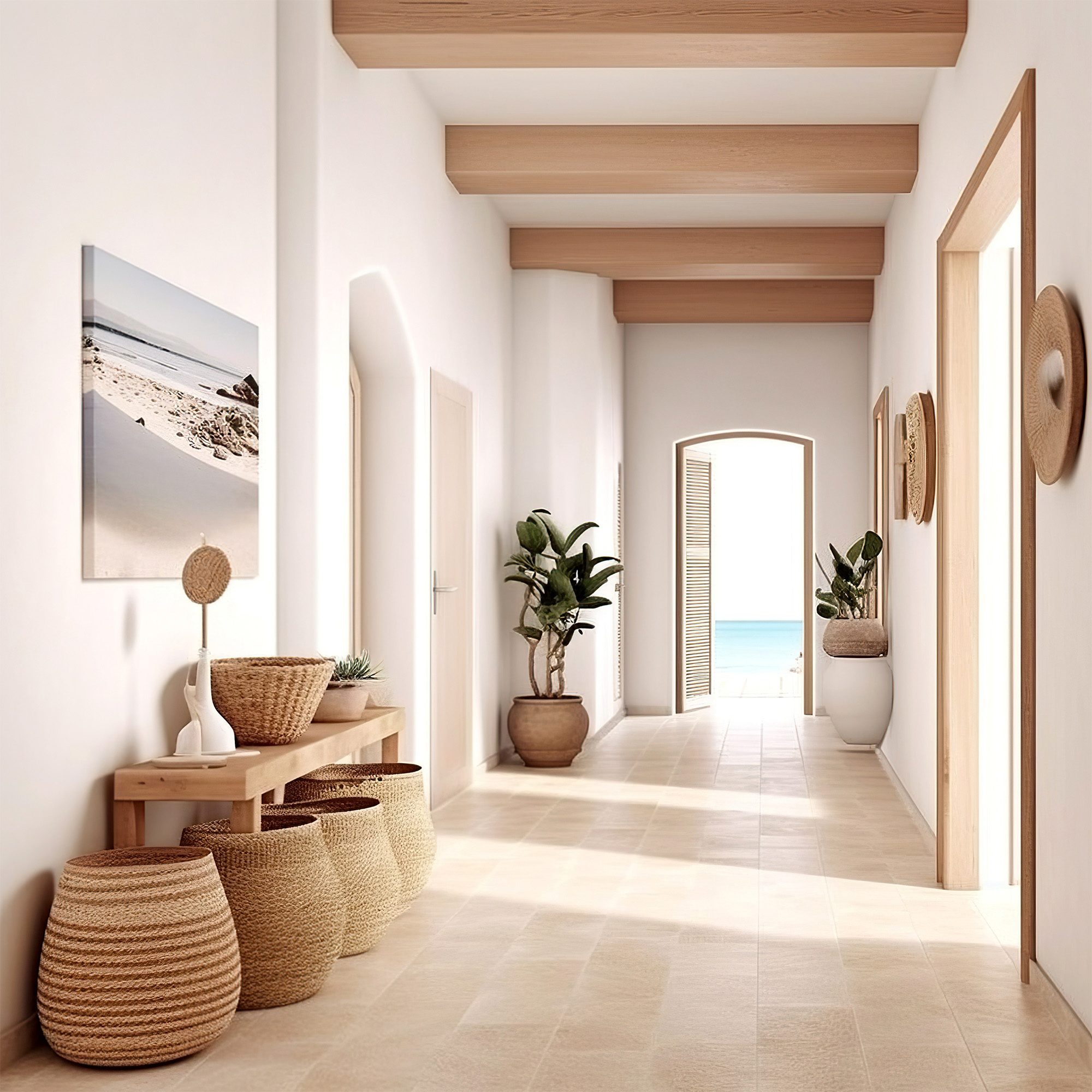
As one of the main transition zones in your home, your entryway or mudroom takes a beating. Between muddy boots from wet winter strolls through Maidu Regional Park, trail dust brought back from summer hikes along the Miner’s Ravine Trail, and daily foot traffic from kids and pets, these high-traffic areas demand a floor that can hold up under pressure.
Tile is naturally a go-to choice for hard-working entryways, but when you begin browsing options, you will quickly face a central decision: Porcelain or Ceramic?
While they may look similar on the surface, their structural differences affect how they handle moisture, impact, and long-term wear. Here is a breakdown of how porcelain and ceramic tile compare across the key performance areas that matter most for Roseville homes.
Planning a remodel of your own? Sign-up for our monthly design notes and receive a complimentary copy of our design guide.
The Core Difference: How They Are Made
Both porcelain and ceramic are made from natural clay fired in a kiln, but the composition and manufacturing process set them apart:
Ceramic Tile: Made from coarse red or white natural clay and fired at lower temperatures. It is softer, lighter, and easier to cut, making it a budget-friendly option for light-to-moderate use.
Porcelain Tile: Crafted from highly refined kaolin clay mixed with feldspar and quartz, then fired at extreme temperatures under massive pressure. This process fuses the raw materials into an ultra-dense, glass-like body.
Head-to-Head: Comparing Performance Factors
1. Water Absorption Rate
Entryways and mudrooms frequently encounter standing water, wet umbrellas, and soaked footwear.
Porcelain: To be classified as true porcelain, a tile must have a water absorption rate of 0.5% or less (per ASTM C373 standards). Its dense structure makes it virtually impervious to water penetration, preventing warping, staining, or moisture damage from beneath.
Ceramic: Ceramic has a higher absorption rate, typically ranging from 3% to 7%. While glazed ceramic keeps water off the surface, unglazed edges or unsealed grout lines can absorb moisture over time if wet shoes sit on the floor for extended periods.
2. Density & Impact Resistance
Entryways double as drop zones for heavy backpacks, sports equipment, toolboxes, and groceries.
Porcelain: Extremely dense and heavy, porcelain boasts superior breaking strength. It resists cracking under heavy impact or concentrated weight. Furthermore, many porcelain tiles feature through-body color, meaning the color extends through the entire tile. If a heavy object chips the surface, the chip is far less noticeable.
Ceramic: Because it is less dense, ceramic is more susceptible to cracking if a heavy object drops on it. Glazed ceramic tiles feature the color and pattern only on the top surface layer—if chipped, the reddish or off-white clay core beneath becomes visible.
3. Slip Resistance (DCOF Rating)
A wet entryway floor quickly becomes a safety hazard. Measuring slip resistance comes down to the Dynamic Coefficient of Friction (DCOF) rating.
Porcelain: Because porcelain can be manufactured with textured, matte, or stone-look finishes, it excels at providing non-slip traction even when wet. For entryways and mudrooms, look for porcelain tiles with a DCOF rating of 0.42 or higher.
Ceramic: Highly glazed ceramic tiles can become notoriously slippery when wet. While matte ceramic options exist, textured porcelain generally offers superior grip underfoot for high-moisture entry zones.
4. Durability & Wear Rating
Tile wear is measured using the PEI (Porcelain Enamel Institute) rating scale, ranging from Group 1 (light wall use) to Group 5 (heavy commercial traffic).
Feature | Ceramic Tile | Porcelain Tile |
Average PEI Rating | Class 2 to Class 3 (Light-to-moderate residential) | Class 4 to Class 5 (Heavy residential to commercial) |
Water Absorption | 3% – 7% (Porous) | ≤ 0.5% (Impervious) |
Scratch & Chip Resistance | Moderate (Surface layer only) | High (Often through-body color) |
Best Used For | Bathrooms, backsplashes, low-traffic areas | Entryways, mudrooms, kitchens, outdoor patios |
Essential Grout Considerations for Mudrooms
The tile you choose is only half the equation—grout performance is equally critical in mudrooms where dirt accumulates quickly.
Standard Cement Grout: Porous and prone to staining from dirt, mud, and water. It requires regular sealing (every 12–18 months) to keep stains at bay.
Epoxy Grout: The ultimate choice for mudrooms. Epoxy grout is non-porous, waterproof, stain-resistant, and never requires sealing. Paired with porcelain tile, epoxy grout creates a virtually bulletproof floor system that wipes clean with mild soap and water.
Grout Color Tip: Avoid stark white or very light grout lines in entry zones. Opt for medium-gray, greige, or charcoal tones that complement your tile choice while naturally disguising everyday dirt.
The Verdict: Which Works Best for Roseville Entryways?
For a low-traffic powder room or wall accent, ceramic tile offers great value and beautiful designs. However, for a Roseville entryway or mudroom, porcelain tile is the clear winner.
Its near-zero water absorption, high impact resistance, and slip-resistant surface textures make it engineered specifically to withstand the demands of an active home’s main entrance.
Design Notes from Designing Dreams
Each month, we share recently completed projects from across the Sacramento area, along with design insights, ideas, and the details that make a home feel exceptional. Join our list and receive our complimentary Renovation Planning Guide.
Find Your Perfect Entryway Tile
Whether you prefer the warmth of a wood-look porcelain plank, a classic stone visual, or a patterned geometric tile, seeing materials in person makes all the difference.
Visit a local showroom to view full-size displays, test surface textures, and consult with a design specialist.


